Breaking News
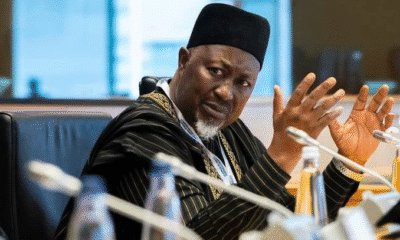
Tinubu: Tension In Abuja As Ministers Scramble Ahead Of Resignation Deadline

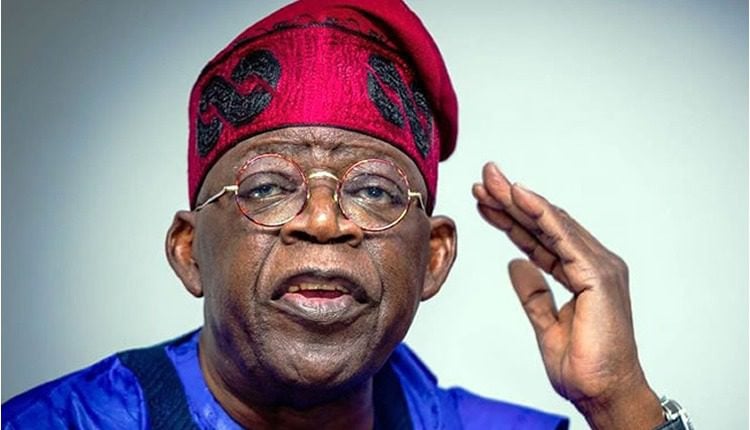
Tension is mounting within the Federal Executive Council following a directive by President Bola Tinubu mandating all political appointees seeking elective offices to resign on or before March 31.
The directive, in line with provisions of the Electoral Act, has triggered unease among ministers and top aides, with findings indicating growing anxiety across power circles in Abuja.
Reports revealed that the development has sent ripples through the Federal Capital Territory, as affected appointees weigh their political ambitions against the risks of stepping down without firm backing.
It was gathered that the President has deliberately distanced himself from appointees seeking his endorsement ahead of party primaries.
Despite intense lobbying, Tinubu has reportedly refused to grant private audiences to ministers and aides seeking his blessing for governorship and legislative ambitions.
Instead, the President is said to have insisted that aspirants must prove their popularity at the grassroots level before seeking higher office.
A high-ranking member of the All Progressives Congress quoted the President as rejecting the role of a political kingmaker.
“The President is a veteran of the trenches,” The SUN quoted the chieftain as saying. “He told a group recently that he is not a ‘kingmaker of appointees’ but a President for all.”
“His message is simple: If you think you are popular enough to lead your state, go home, resign and prove it to the delegates.”
Findings indicate that since the resignation deadline was conveyed through the Office of the Secretary to the Government of the Federation, George Akume, several influential ministers have made frantic efforts to secure one-on-one meetings with the President.
The meetings, it was learnt, are aimed at obtaining a clear endorsement to strengthen their chances and avoid political confrontations with state governors who may resist external influence.
However, the President’s refusal to grant such access has left many of the aspirants in a difficult position.
The situation is further complicated by the provisions of the Electoral Act, particularly Section 84(12), which bars political appointees from participating as delegates or aspirants unless they resign their positions.
With the Independent National Electoral Commission expected to hold party primaries by the end of April, any appointee who fails to resign before April 1 risks automatic disqualification.
This has effectively shut the door on what insiders describe as “political moonlighting.”
Amid the uncertainty, several cabinet members are reportedly preparing to join the political race.
The Minister of Power, Adebayo Adelabu, is being touted as a leading contender for the APC governorship ticket in Oyo State.
Similarly, the Minister of Communications, Bosun Tijani, is said to be eyeing the governorship ticket in Ogun State, although it remains unclear whether he will resign.
The Minister of Transportation, Saidu Alkali, is reportedly positioning himself for the APC governorship ticket in Gombe State.
In Bauchi State, both the Minister of Health, Muhammad Ali Pate, and the Minister of Foreign Affairs, Yusuf Maitama Tuggar, are seen as strong contenders for the party’s ticket.
The Minister of Agriculture, Abubakar Kyari, is also expected to contest the governorship seat in Borno State, currently held by Governor Babagana Zulum.
Meanwhile, the Minister for Humanitarian Affairs, Bernard Doro, is reportedly set to contest for the Plateau North senatorial seat.
The President’s stance has left many appointees in a dilemma, as they must decide whether to resign without guaranteed support or remain in office and forfeit their political ambitions.
In political circles, the atmosphere has been described as tense but subdued, with many aspirants now resorting to quiet consultations.
As the March 31 deadline draws near, the once-vocal ambitions of some appointees have given way to cautious calculations.
Insiders described the situation as a “departure lounge” at the Presidential Villa, crowded but silent as political actors weigh the risks of stepping into the electoral arena without the President’s backing.






Tinubu: Tension In Abuja As Ministers Scramble Ahead Of Resignation Deadline

Vote Tinubu In 2027 To Avoid ‘War In Nigeria’ – Portable Warns Yorubas

Nigerians Will Soon Enjoy Reliable Electricity Supply – Adelabu

2027: Labour Party To Hold Presidential Primary May 23

Eid-el-Fitr: FG Announces Two-day Public Holiday

Maiduguri Bombings: Atiku Demands Urgent Review Of Security Strategy

Maiduguri Explosions: Tinubu Orders Service Chiefs to Relocate, Vows To Crush Terrorists

Tinubu Inaugurates New Task Force To Drive Petroleum Sector Reforms

Petrol Price Drops As NNPC Slashes Pump Price By ₦100

Reps Amend Electoral Act, Propose ₦10m Fine, Jail For Dual Party Membership

Top 10 Richest Men in Anambra State

Etisalat Offices in Lagos: Addresses and Contacts

Full List of Political Parties In Nigeria and Their Slogan

Peace Mass Transit Price List, Terminals, Bookings, And Contacts

Full List of Airtel Stores and Office Addresses in Nigeria

Full List Of Pentecostal Churches In Nigeria

Uju Okoli Net Worth and Biography – Age, Family, Husband, and Career

Current Abuja Zip Codes: Full List of Abuja Postal Codes

Tattoos in Nigeria: Price of Tattoos and List of Tattoos Shops in Nigeria