Breaking News
Kidnapping: Children Idle, Assessments Disrupted As Oyo Teachers’ Strike Lingers

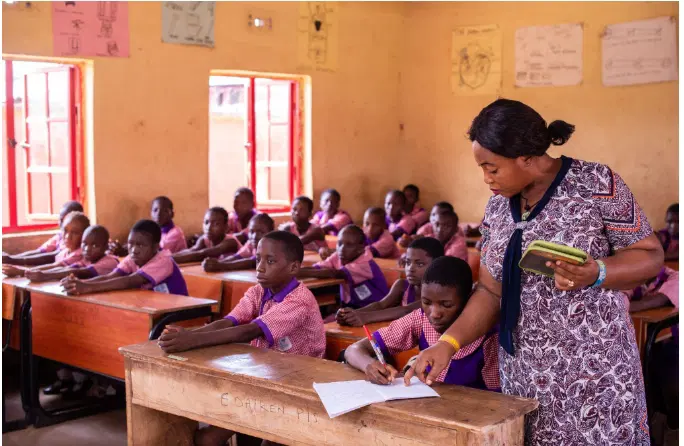
The indefinite strike embarked upon by the Nigeria Union of Teachers in Oyo State has continued to raise concerns among parents, teachers and education stakeholders, with many warning that the prolonged closure of public schools is exposing children to negative influences and disrupting academic activities.
Some parents and teachers who spoke with the News Agency of Nigeria in Ibadan on Wednesday expressed fears over the impact of the strike on pupils and students, saying many children have been left idle at home while others now spend their days roaming the streets, hawking goods or engaging in non-academic activities.
The NUT had directed all public primary and secondary school teachers in the state to commence an indefinite strike from June 1 following the abduction of teachers and pupils in Oriire Local Government Area on May 15.
Since the industrial action began, public schools across the state have remained shut, leaving thousands of learners out of the classroom.
A teacher, Mrs Yemisi Alao, blamed what she described as the indifferent attitude of some parents toward the education and future of their children.
According to her, many parents leave their children unattended while they go to work or attend to their businesses, without making arrangements to engage them in meaningful activities.
“Ignorance has led many parents to neglect their children’s future. They believe the government should do everything without them lifting a finger.
“The children are not well monitored, and some of those placed under apprenticeship are also not serious about learning the trade,” she said.
Alao described the development as unfortunate, stressing that the country often waits for problems to escalate before taking action.
“As we pray and believe in God for the release of the abducted children, we should not forget to put measures in place to secure the future of every child,” she added.
She further noted that the strike came at a critical period in the academic calendar when many schools were preparing to conduct continuous assessment exercises.
According to her, the eventual reopening of schools could result in rushed academic activities as teachers attempt to recover lost time and complete the curriculum.
“This is a collective call to action. People should be interested in mentoring children around them and engaging them meaningfully with books, sports and other productive activities so that their minds will be occupied with positive ideas rather than fraudulent ones,” she said.
A parent residing in the Mokola area of Ibadan, Mr Godwin Obinna, said the strike had altered the daily routine of many children, with some now roaming the streets while others engage in petty trading for their parents.
“My children are already worried and keep asking whether there will be no schooling again.
“I keep reassuring them that the situation is temporary and things will get better.
“This whole situation is unfair,” he said.
Obinna called on the Oyo State Government to urgently address the issues that led to the strike and strengthen security in schools across the state.
“The government should put adequate security measures in place in schools to prevent unauthorised access,” he said.
Another parent, Mrs Bolajoko Yusuf, who lives in the Alaadorin area of Yemetu, said children in her neighbourhood now spend most of their time playing football, singing and engaging in other leisure activities.
She explained that residents had adopted a community-based approach to supervising children during the period of school closure.
“What we do in my neighbourhood is watch over the children and ensure they are safe because not all parents can stay at home.
“Parents usually leave instructions for their wards before going to work to play safe and avoid fighting,” Yusuf said.
She noted that while the arrangement had helped ensure the safety of children, it could not replace the structured learning environment provided by schools.
Also speaking, Mrs Adeola Aina, a resident of the Nalende area of Ibadan, said she enrolled her children in tailoring apprenticeships to keep them engaged and away from harmful influences.
However, she noted that younger children between the ages of three and seven remained the most vulnerable group during the strike because they were too young to participate in apprenticeship programmes.
“They just play around while their parents leave them in the care of neighbours or sometimes alone,” she said.
Aina warned that prolonged school closures could have long-term consequences on children’s development if urgent steps were not taken to resolve the crisis.
Another parent, Mrs Tunrayo Adeyemo, who resides in the Total Garden area of Ibadan, said her children spend most of their day playing after completing household chores.
She lamented that parents had little control over the situation and could only hope for a quick resolution.
“We are not happy that our children are at home when they ought to be in school, but there is nothing we can do about it.
“We can only pray that the abducted children are released soon,” she said.
The continued closure of public schools has heightened concerns among education stakeholders over the possible effects on learning outcomes, especially for pupils preparing for examinations and continuous assessments.
Many parents have appealed to the government, security agencies and education authorities to work together to ensure the safe release of the abducted teachers and pupils, restore confidence in school security and bring an end to the strike.
They warned that every additional day spent outside the classroom increases the risk of learning loss, exposes children to harmful influences and threatens the academic progress of thousands of pupils and students across Oyo State.












Kidnapping: Children Idle, Assessments Disrupted As Oyo Teachers’ Strike Lingers

ADC Rejects Court Order Directing INEC To Deregister Party

2027: ADC Names Rotimi Amaechi Atiku’s Running Mate

Army Raids Terrorist Hideouts After General Rabe Abubakar’s Death In Katsina

Democracy Day: Tinubu Warns Bandits, Kidnappers To Surrender

Reps Approve State Police Bill As 288 Lawmakers Vote In Favour

FG Receives 270 Nigerian Returnees From South Africa

Opposition Behind Rising Insecurity – Edo Gov Okpebholo Alleges

Peter Obi, I Not Working For Tinubu, Says Kwankwaso

Tinubu: FG Won’t Surrender To Terrorists, Bandits

Etisalat Offices in Lagos: Addresses and Contacts

Top 10 Richest Men in Anambra State

Full List of Political Parties In Nigeria and Their Slogan

Peace Mass Transit Price List, Terminals, Bookings, And Contacts

Full List of Airtel Stores and Office Addresses in Nigeria

Full List Of Pentecostal Churches In Nigeria

Uju Okoli Net Worth and Biography – Age, Family, Husband, and Career

Current Abuja Zip Codes: Full List of Abuja Postal Codes

Tattoos in Nigeria: Price of Tattoos and List of Tattoos Shops in Nigeria