
Breaking News
Subsidy Removal: FG Discloses How ₦15.8 Trillion Savings Were Shared

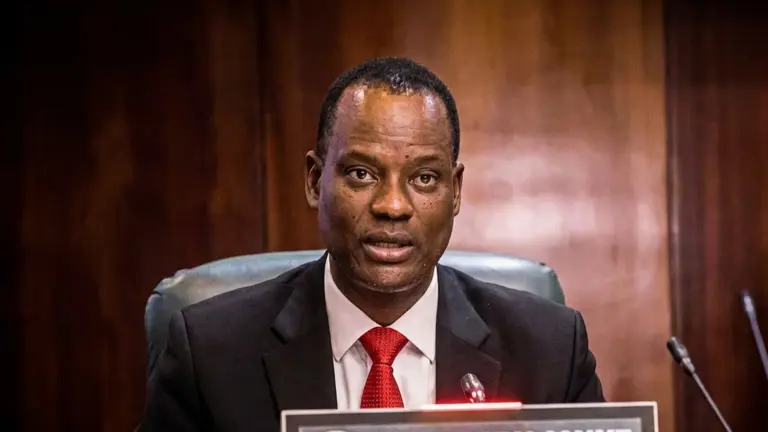
The Federal Government has disclosed that the removal of the fuel subsidy and other economic reforms introduced under President Bola Tinubu generated ₦15.8tn in savings for the Federation Account over the past three years.
The Minister of Finance and Coordinating Minister of the Economy, Taiwo Oyedele, disclosed this on Wednesday at a press conference monitored by journalists.
Oyedele explained that the savings from the removal of fuel subsidy were distributed among the three tiers of government through the Federation Account.
According to him, the Federal Government received ₦5.43tn, while state governments received ₦6.52tn and local governments received ₦3.88tn.
The minister said the savings represented the financial impact of the subsidy removal reforms and did not amount to money sitting in one account for the Federal Government to spend.
Oyedele said the reforms also resulted in ₦3.12tn in incremental revenues and ₦11.85tn in incremental borrowing during the period under review.
Combining the additional resources, he said the Federal Government recorded approximately ₦20.4tn in incremental resources.
However, the minister said the government also incurred additional expenditures of about ₦30.64tn during the same period.
Oyedele explained that the removal of subsidy did not create a huge pool of cash available exclusively to the Federal Government.
Rather, he said the policy reduced the financial burden of subsidising petrol and limited the amount of additional borrowing that would otherwise have been required.
He stated, “The Federal Government had approximately N20.4 trillion in incremental resources.
“Over the same period, additional expenditures amounted to approximately N30.64 trillion. Subsidy removal therefore did not create one large pool of cash available to the Federal Government. It reduced a major fiscal burden and the amount of additional borrowing that would otherwise have been required.”
Giving a breakdown of the additional expenditure, Oyedele said ₦9.39tn was spent on wage adjustments during the period.
He said another ₦9.37tn went into servicing external debt.
The government also spent ₦6.47tn on infrastructure and ₦3.14tn on electricity subsidies, according to the minister.
The figures indicate that wage adjustments and external debt servicing accounted for the largest portions of the additional expenditure recorded during the period.
The disclosure comes more than three years after President Tinubu announced major economic reforms shortly after assuming office in 2023.
In May 2023, during his inauguration speech, Tinubu announced the removal of the petrol subsidy, a policy that immediately triggered changes in fuel prices across the country.
The administration also moved to liberalise the foreign exchange market and allow the naira to trade more freely.
The reforms resulted in a sharp increase in the price of petrol and significant fluctuations in the value of the naira.
The Federal Government has consistently defended the policies, arguing that the subsidy regime was no longer financially sustainable and that the reforms were necessary to reduce pressure on government finances and redirect resources to other areas of the economy.



Subsidy Removal: FG Discloses How ₦15.8 Trillion Savings Were Shared

Atiku Reveals How He Stopped Tinubu From Becoming His Running Mate

NDLEA Arrests Businessman With N23m Cocaine, Seizes N2.6bn Codeine

What Tinubu Said As INEC Declares Adeleke Winner of Osun Governorship Election

Osun Election Results: Davido Declares Adeleke Winner

Why Gov’t Has To Fund Mass Weddings In Sharia States With Public Money – Sheikh Gumi

State Police: Presidency Sets Today For Public Submissions Deadline

Osun Election: ADC Blames President Tinubu for Fadahunsi’s ‘Kill Accord Members’ Comment

17 Bandits, 10 Policemen Killed In Fierce Gun Battle In Kebbi

2027: Tinubu Won’t Win Any State Without Rigging – Kenneth Okonkwo

Full List of Air Force Bases In Nigeria

Etisalat Offices in Lagos: Addresses and Contacts

Top 10 Richest Men in Anambra State

Full List of Airtel Stores and Office Addresses in Nigeria

Peace Mass Transit Price List, Terminals, Bookings, And Contacts

Full List of Political Parties In Nigeria and Their Slogan

Full List Of Pentecostal Churches In Nigeria

Uju Okoli Net Worth and Biography – Age, Family, Husband, and Career

Current Abuja Zip Codes: Full List of Abuja Postal Codes
