Breaking News
Jonathan Replies Atiku, Defends Presidency Over ‘Inexperience’ Claim


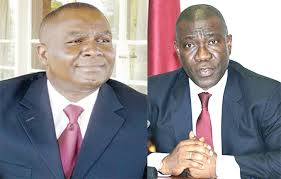
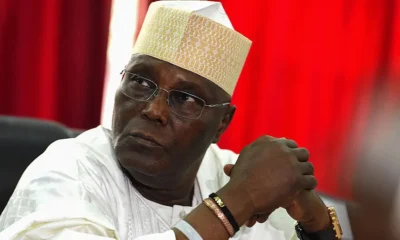
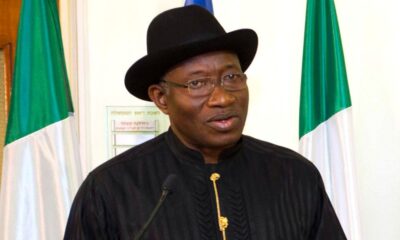
Former President, Goodluck Jonathan, has responded to recent remarks by former Vice-President, Atiku Abubakar, who described him as a “decent” but “inexperienced” leader.
Atiku, a chieftain of the African Democratic Congress, had made the comment during an interview on Arise TV, where he linked some of the challenges experienced during Jonathan’s administration to what he termed inadequate leadership preparation.
Reacting on Monday at the 2025 awards ceremony of the Association of Retired Career Ambassadors of Nigeria in Abuja, Jonathan did not mention Atiku by name but appeared to address the criticism.
The former President pushed back against the suggestion that age or experience alone determines leadership competence.
He said, “So not too long ago, a very senior politician said Jonathan was too young and that was why he made mistakes.”
Jonathan acknowledged that errors are inevitable in leadership, stressing that no individual in high office is immune from making decisions that may later be questioned.
“If I made mistakes, yes nobody who becomes a governor or President will say they did not make mistakes. All human beings must make mistakes,” he stated.
He added pointedly, “Must I be 100 years before I run the affairs of the state?”
Continuing his defence, Jonathan argued that his political journey and the circumstances that brought him to power demonstrated his capability.
“If I were so naive, I don’t think I would have been able to navigate that process,” he said.
Jonathan assumed office as Nigeria’s President following the death of former President, Umaru Musa Yar’Adua, a transition widely regarded as one of the most delicate periods in the country’s democratic history.
The exchange between the two political heavyweights has since stirred fresh debate over leadership, experience, and accountability in Nigeria’s governance space.








Democracy Day: Tinubu Warns Bandits, Kidnappers To Surrender

Reps Approve State Police Bill As 288 Lawmakers Vote In Favour

FG Receives 270 Nigerian Returnees From South Africa

Opposition Behind Rising Insecurity – Edo Gov Okpebholo Alleges

Peter Obi, I Not Working For Tinubu, Says Kwankwaso

Tinubu: FG Won’t Surrender To Terrorists, Bandits

Tinubu Govt More Focused on 2027 Than Insecurity – Says Dalung

Sunday Igboho Threatens To Expose Politicians Behind Oyo Schoolchildren’s Abduction

Gunmen Kidnap Ex-Minister Adelabu’s Sister, Twins In Ibadan

Oyo Abduction: Families Reject Govt Rice, Cash, Demand Children’s Freedom

Etisalat Offices in Lagos: Addresses and Contacts

Top 10 Richest Men in Anambra State

Full List of Political Parties In Nigeria and Their Slogan

Peace Mass Transit Price List, Terminals, Bookings, And Contacts

Full List of Airtel Stores and Office Addresses in Nigeria

Full List Of Pentecostal Churches In Nigeria

Uju Okoli Net Worth and Biography – Age, Family, Husband, and Career

Current Abuja Zip Codes: Full List of Abuja Postal Codes

Tattoos in Nigeria: Price of Tattoos and List of Tattoos Shops in Nigeria