
Breaking News
2027: ‘Our Back Is Against The Wall’ – Opposition Parties Begin Fresh Plot To Defeat Tinubu

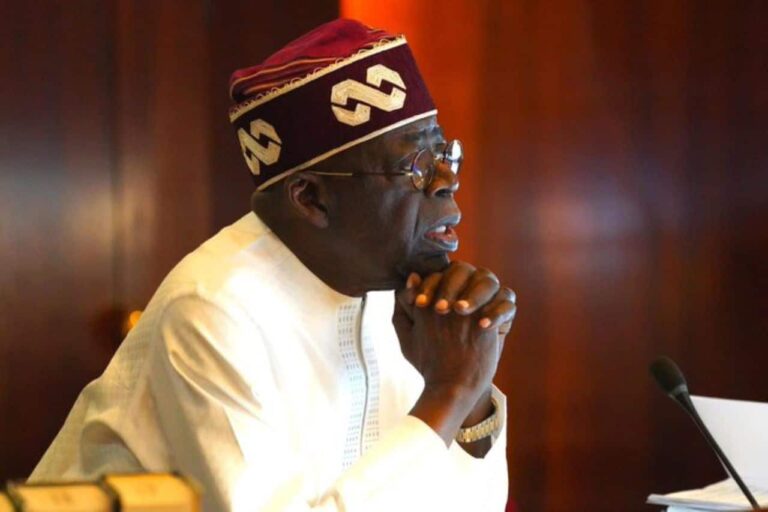
The opposition’s 2027 strategy has taken a fresh turn, with six political parties moving to build a common platform against the ruling All Progressives Congress (APC), despite the absence of some of the biggest names linked to the coalition.
The development came at a political summit in Abuja on Monday, where opposition leaders agreed to begin a structured process that could eventually produce a common presidential candidate for the 2027 general elections.
Among those absent were the African Democratic Congress (ADC) presidential candidate, Alhaji Atiku Abubakar; Nigeria Democratic Congress (NDC) presidential candidate, Mr Peter Obi; and the Allied Peoples Movement (APM) and Oyo State Governor, Engr Seyi Makinde.
However, their absence did not stop the meeting from attracting other prominent opposition figures, including Social Democratic Party (SDP) presidential candidate, Prince Adewole Adebayo; Peoples Redemption Party (PRP) presidential candidate, Donald Duke; and APM vice-presidential candidate, Lawal Musa Daura.
National Working Committee (NWC) and Board of Trustees (BoT) members of the participating parties also attended the summit.
The meeting, facilitated by the G-100, focused largely on how the opposition could avoid the vote-splitting that characterised the 2023 presidential election and present a stronger challenge to President Bola Tinubu in 2027.
In his opening remarks, Mallam Salihu Lukman, who spoke on behalf of the G-100, proposed a Government of National Competence (GNC) based on a single four-year transition administration.
He said the proposal was designed to go beyond merely bringing opposition politicians together for electoral purposes, insisting that any agreement reached must be properly documented and enforceable.
According to Lukman, the proposed government would be built around competence, integrity, national inclusion and fair representation of all parties involved.
He said the arrangement should be backed by an enforceable political commitment to a single four-year term.
Lukman warned that the opposition could not afford another situation where political leaders make promises during negotiations but abandon them after gaining power.
“This gathering does not need more sincerity. Nigerian politics has never suffered from a shortage of sincere promises,” he said.
He added that every resolution reached must be “written, witnessed, and have consequences.”
Lukman also recalled how opposition parties remained divided during the 2003, 2007 and 2011 presidential elections before coming together to defeat the then ruling party in 2015.
He argued that the 2023 election offered another lesson, as opposition votes were divided among major candidates.
According to him, the eventual winner secured just under nine million votes, while two major opposition candidates polled close to seven million and just over six million votes respectively.
“Nobody stole thirteen million votes. We divided them ourselves in public, and we did it knowing exactly what the consequence would be,” Lukman said.
He cited Kenya and Malaysia as examples of countries where opposition parties successfully defeated long-standing ruling parties after choosing unity over fragmentation.
‘I’m Ready To Drop My Ambition’ – Duke
One of the presidential candidates at the summit, Donald Duke of the PRP, said he was prepared to sacrifice his personal ambition if that would help the opposition produce a candidate capable of winning the 2027 election.
Duke blamed political ego for some of the failures recorded by opposition parties in the past.
He said opposition leaders must be prepared to work together and accept whichever candidate emerges through an agreed process.
“If we think we can go it all alone, then we will fail,” he said.
The Minority Leader of the House of Representatives, Fred Agbedi, also urged opposition parties to put aside their differences and replicate the strategy used by the APC in 2015.
Agbedi said the Minority Caucus had partnered with the G-100 to help opposition parties streamline their ambitions and work towards a collective victory in 2027.
He warned that going into another election as a divided opposition could produce the same outcome witnessed in 2023.
The lawmaker urged politicians to put the collective interest ahead of individual ambitions.
ADC Warns Against Fighting One Another
Representing the ADC, its National Vice Chairman, South-South, Usani Uguru Usani, expressed optimism about the coalition but warned opposition politicians against turning their attacks on one another.
He said the current political situation provided the opposition with an opportunity to make decisions based on the performance of the present administration rather than speculation.
“There is something that is happening among the opposition people or party. We seem to be attacking ourselves much more than we attack a common enemy, which is not correct,” Usani said.
The APM National Chairman, Yusuf Mamman Dantalle, described the gathering as a historic moment and urged the participating parties to place the interest of Nigeria above personal and party considerations.
‘Our Back Is Against The Wall’ – PRP Chairman
PRP National Chairman, Dr Hakeem Baba-Ahmed, described the summit as historic, saying Nigerians were closely watching the opposition’s next move.
He said the parties represented at the meeting were facing serious political challenges, including litigation, but insisted that the coalition process would continue.
“Our back is against the wall but we’ll fight back. In 2027, we will together remove this government and put the Nigerian nation on a different trajectory,” he said.
Representing the Tanimu Turaki-led faction of the Peoples Democratic Party (PDP), the party’s BoT Secretary, Dr Babangida Aliyu, also backed the initiative.
Aliyu called for the coalition-building process to be taken to the state and local government levels to ensure that the arrangement was sustained beyond Abuja.
At the end of the summit, the six parties adopted a communiqué and agreed to begin formal negotiations on opposition cooperation ahead of the 2027 elections.
They established a Central Leadership Committee made up of national chairmen, national secretaries, presidential and vice-presidential candidates of the participating parties.
A Publicity and Communication Committee and a Legal Committee were also approved.
Five working groups are expected to produce reports within four weeks on a National Covenant for Democratic Renewal, Single-Term Transition Charter, National Reform Programme, Framework for Opposition Unity and a Roadmap to a Common Presidential Candidate.
The reports will be presented at a second summit, with the date and venue to be determined by the Central Leadership Committee.
The parties clarified that Monday’s summit was not about asking any political party to dissolve or merge.
They also stressed that no presidential candidate was being asked to withdraw from the 2027 race at this stage.
Lukman said the immediate objective was to create the framework upon which negotiations for leadership and candidacy could later take place.
Meanwhile, the parties called on the United States Government to ensure the timely and lawful disclosure of all non-exempt official records concerning President Bola Tinubu that are of legitimate public interest.
They also resolved to communicate their position to the ECOWAS Commission.
The G-100, according to the communiqué, will remain a facilitator and observer without taking over the decision-making authority of the political parties.
Atiku Explains Absence
Meanwhile, Atiku Abubakar has denied deliberately staying away from the Abuja summit.
His Senior Special Assistant on Public Communication, Phrank Shaibu, said the former vice president’s absence was unavoidable and should not be interpreted as a rejection of the coalition initiative.
“No. Not at all. His Excellency Atiku Abubakar’s absence was unavoidable and should not be misconstrued as a boycott,” Shaibu said.
He added that Atiku remained committed to the G-100’s objective of building a united opposition capable of challenging the APC in 2027.
The recent political development in Osun State also featured prominently in the broader argument for opposition unity.
The outcome of the election showed that political strength at the centre does not automatically translate into victory at the grassroots.
Despite the backing enjoyed by the APC and the presence of influential political figures, Governor Ademola Adeleke was able to retain his position.
The result has further strengthened the argument among opposition leaders that voters can make independent choices based on performance, local issues and trust, rather than simply following the political strength of national parties.






2027: ‘Our Back Is Against The Wall’ – Opposition Parties Begin Fresh Plot To Defeat Tinubu

Pray For Us, We’re Nigeria’s Problem – Peter Obi Tells Nigerians

US To Withdraw 200 Troops From Nigeria After ISIS Commander’s Killing

‘Police Are The Unknown Gunmen, I’ll Tender Evidence’ – VeryDarkMan Alleges

‘Investigate, Prosecute Me Over $16bn Power Funds’ – Atiku Challenges Tinubu

Sowore, Amaechi Clash At NBA Conference

Nollywood: Tears As Veteran Actor Ogogo Is Laid To Rest

Top 10 Palm Oil Producing States In Nigeria

FG Declares Tuesday Public Holiday

2027 Presidency: Tinubu Will Defeat Kwankwaso In Kano, Jibrin Boasts

Etisalat Offices in Lagos: Addresses and Contacts

Full List of Air Force Bases In Nigeria

Top 10 Richest Men in Anambra State

Full List of Airtel Stores and Office Addresses in Nigeria

Peace Mass Transit Price List, Terminals, Bookings, And Contacts

Full List of Political Parties In Nigeria and Their Slogan

Full List Of Pentecostal Churches In Nigeria

Uju Okoli Net Worth and Biography – Age, Family, Husband, and Career

Current Abuja Zip Codes: Full List of Abuja Postal Codes
