
Breaking News
Tinubu Urge African Leaders To Fault South African Xenophobic Attacks

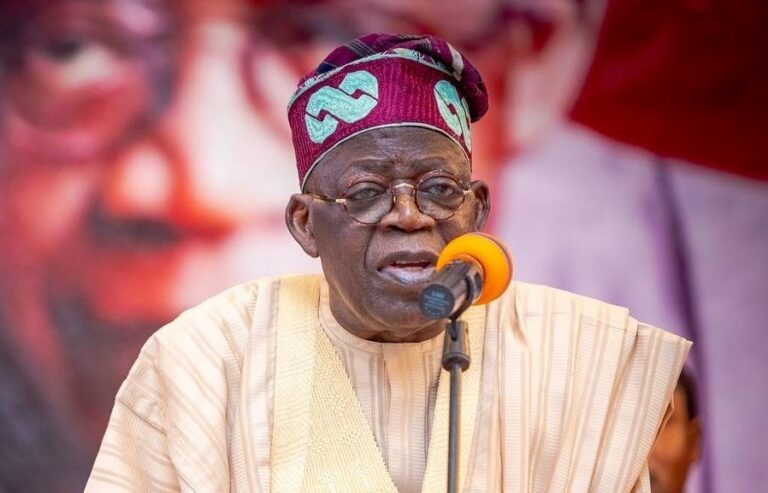
President Bola Ahmed Tinubu has called on African leaders to speak with one voice in condemning the ongoing Afro-phobic attacks, also known as xenophobia, in South Africa, saying such acts of intolerance have no place on the continent.
The President made the call on Sunday at the 69th Ordinary Session of the ECOWAS Authority of Heads of State and Government in Freetown, Sierra Leone. He was represented at the summit by Vice President Kashim Shettima.
Tinubu disclosed that Nigeria had already evacuated more than 1,490 of its citizens from South Africa following the attacks and was ready to take additional measures if necessary.
The President said ECOWAS should support the call by Ghana for the matter to be tabled before the next meeting of the African Union Assembly.
“Nigeria condemns, in the strongest terms, the recent attacks on its citizens and other Africans in the Republic of South Africa,” he said.
“As already stated by His Excellency, the President of Ghana, ECOWAS should present a united voice in this condemnation and table the matter before the next session of the Authority of Heads of State and Government of the African Union.
“This would send a clear message that this type of intolerance is totally unacceptable under any guise. South Africa should be reminded that the freedom it currently enjoys is the result of the sacrifices and liberation efforts of African countries, including Nigeria.”
Tinubu said the Federal Government had already evacuated over 1,490 Nigerians from South Africa in seven batches to ensure their safety.
The President reaffirmed Nigeria’s commitment to the newly introduced ECOWAS Compact for the Future of Regional Integration, describing it as a roadmap for strengthening cooperation among member states.
According to him, the Compact reflects the collective resolve of ECOWAS countries to rebuild public trust, deepen regional solidarity and promote peace, prosperity and sustainable development across West Africa.
He pledged that Nigeria, as one of the founding members of ECOWAS and the region’s largest economy, would continue to support the implementation of the Compact and its six strategic pillars.
“As the largest economy and one of the key founding members of our Regional Economic Community, Nigeria remains steadfast in its historic responsibility to continue the promotion of regional unity, peace, economic integration, and democratic governance,” he said.
The President urged ECOWAS leaders to intensify efforts to tackle insecurity, terrorism and unconstitutional changes of government across the region.
He reiterated Nigeria’s support for the proposed ECOWAS Counter Terrorism Force and the strengthening of the ECOWAS Standby Force to improve intelligence sharing, joint military operations and preventive diplomacy.
“On peace, security, and democratic governance, Nigeria reaffirms that sustainable development cannot be achieved in an environment of insecurity and instability,” he said.
“Nigeria supports the Compact’s commitment to constitutional governance, the rule of law, respect for human rights, and zero tolerance for unconstitutional changes of government.”
Tinubu also advocated the removal of trade barriers and greater investment in cross-border infrastructure to facilitate the free movement of people, goods and services across West Africa.
He said creating a more business-friendly environment would encourage entrepreneurship, attract investment and strengthen regional economic integration.
The President further stressed the need for greater investment in science, technology and innovation, saying the proposed Digital Single Market would create opportunities in education, financial inclusion, job creation and entrepreneurship, especially for young people.
He also reaffirmed Nigeria’s commitment to promoting gender equality, expanding opportunities for women in leadership and supporting youth development across the region.
Earlier, Sierra Leone’s President and Chairman of ECOWAS, Julius Maada Bio, said the summit was convened to assess the progress of the regional bloc and chart a new course for the future.
He said ECOWAS Vision 2050 provides a framework for building a peaceful, integrated and prosperous West Africa but warned that changing global realities require member states to rethink old assumptions and embrace new approaches.
“We should work on partnerships that expand our opportunities, while remaining firmly anchored in our own interests,” Bio said.
He added that climate change and global economic disruptions continue to put pressure on food security, fuel supply and national economies across the region.
Also speaking, the Deputy Secretary-General of the United Nations, Amina Mohammed, reaffirmed the organisation’s support for ECOWAS and countries in West Africa and the Sahel in the fight against terrorism.
She said the international community has a responsibility to support African-led solutions to insecurity and violent extremism.
“The United Nations Security Council must clearly hear the voice of Africa and stand behind the solutions that Africa offers,” she said.
“We have seen what it looks like in this region. There is new momentum and dialogue across political divides and across geography.”
Meanwhile, President of the ECOWAS Commission, Omar Alieu Touray, reiterated the regional body’s commitment to improving governance, accountability and policy coordination among member states.
One of the major highlights of the summit was the signing of the Intergovernmental Agreement for the African Atlantic Gas Pipeline project, a major regional energy initiative expected to boost economic cooperation and energy security across West Africa.





Nigerian Youths Selling Their Kidneys Due To Hardship Under Tinubu Gov’t – Atiku

PFIPC: Court Denies Bail To ‘Fake DG’ Adeyemi, Orders Police To Grant Him Access To Lawyers

They Will Come For My Head If Tinubu Loses 2027 Election – Wike

2027: ‘Our Back Is Against The Wall’ – Opposition Parties Begin Fresh Plot To Defeat Tinubu

Pray For Us, We’re Nigeria’s Problem – Peter Obi Tells Nigerians

US To Withdraw 200 Troops From Nigeria After ISIS Commander’s Killing

‘Police Are The Unknown Gunmen, I’ll Tender Evidence’ – VeryDarkMan Alleges

‘Investigate, Prosecute Me Over $16bn Power Funds’ – Atiku Challenges Tinubu

Sowore, Amaechi Clash At NBA Conference

Nollywood: Tears As Veteran Actor Ogogo Is Laid To Rest

Etisalat Offices in Lagos: Addresses and Contacts

Full List of Air Force Bases In Nigeria

Top 10 Richest Men in Anambra State

Full List of Airtel Stores and Office Addresses in Nigeria

Peace Mass Transit Price List, Terminals, Bookings, And Contacts

Full List of Political Parties In Nigeria and Their Slogan

Full List Of Pentecostal Churches In Nigeria

Uju Okoli Net Worth and Biography – Age, Family, Husband, and Career

Remita Customer Care and Contact Details (Updated)
