Breaking News
Nigerian Refineries Won’t Work Again – Says Obasanjo


Former President Olusegun Obasanjo has reiterated his long-held position that government-owned refineries in Nigeria will never function effectively again.
The elder statesman maintained his stance despite ongoing efforts by the Federal Government to rehabilitate the country’s refineries.
Shortly after assuming office, President Bola Tinubu had expressed optimism that the Port Harcourt refinery would resume operations by December 2023.
The President linked the timeline to the completion of a rehabilitation contract between the Nigerian National Petroleum Company Limited (NNPCL) and Italian firm Maire Tecnimont SpA.
However, Obasanjo dismissed the projection, citing past experience during his tenure.
“Someone told me Tinubu said refineries would work by December. I told the person the refineries would not work. This is based on the information I received from Shell when I was president,” he said in an earlier reaction.
Responding at the time, the President’s Senior Special Assistant on Media and Publicity, Tope Ajayi, argued that Obasanjo’s comments were personal opinions and not grounded in technical expertise.
“Former President Olusegun Obasanjo, with due respect to him, is not an engineer. He’s not the engineer working at the refineries,” Ajayi said.
He added that engineers handling the rehabilitation project had assured the government of progress.
“I will rather rely on the judgment of the engineers who are working at the refinery. So, I think we should wait until December,” he stated.
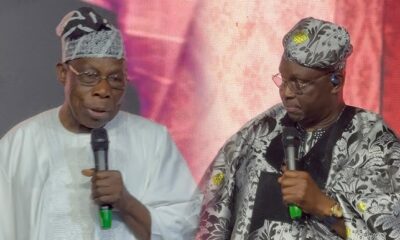
Speaking again at the weekend on Sony Irabor Live aired on News Central, Obasanjo doubled down on his position, arguing that structural issues have long undermined the viability of government-owned refineries.
He cited his unsuccessful attempt to involve Shell in managing the facilities during his presidency.
“When I was there, I called Shell. I said, ‘Look, please, I beg you, come and take 10 per cent equity and run the refinery for us.’ They said no,” he said.
“I said, ‘Okay, if you don’t want to take equity, don’t take equity. Come and run the refineries.’ They said no.”
Obasanjo said a senior Shell official later explained the reasons behind the refusal.
“He said first, they make most of their profits on the upstream, not the downstream.
“Number two: he said our refineries are too small… one is 60,000 barrels, and another is 100,000 barrels, whereas refineries at that time were in the range of 250,000 to 300,000 barrels.
“Number three: our refineries are not well maintained… we call quacks and amateurs to maintain them.
“Number four, there’s too much corruption around our refineries, and they don’t want to be part of that,” he added.
The former President advocated a public-private partnership model as a more sustainable solution for Nigeria’s energy sector.
“One of the lessons that I learnt is that PPP works. Look at the Nigeria Liquefied Natural Gas, where the private sector has 51 per cent and the Nigerian government has 49 per cent,” he said.
He cited the NLNG project as a successful example of collaboration between the government and private investors, contrasting it with the challenges faced by state-owned enterprises.








Reps Approve State Police Bill As 288 Lawmakers Vote In Favour

FG Receives 270 Nigerian Returnees From South Africa

Opposition Behind Rising Insecurity – Edo Gov Okpebholo Alleges

Peter Obi, I Not Working For Tinubu, Says Kwankwaso

Tinubu: FG Won’t Surrender To Terrorists, Bandits

Tinubu Govt More Focused on 2027 Than Insecurity – Says Dalung

Sunday Igboho Threatens To Expose Politicians Behind Oyo Schoolchildren’s Abduction

Gunmen Kidnap Ex-Minister Adelabu’s Sister, Twins In Ibadan

Oyo Abduction: Families Reject Govt Rice, Cash, Demand Children’s Freedom

Mohammed Speaks On Leaving APM, Returning To PDP

Etisalat Offices in Lagos: Addresses and Contacts

Top 10 Richest Men in Anambra State

Full List of Political Parties In Nigeria and Their Slogan

Peace Mass Transit Price List, Terminals, Bookings, And Contacts

Full List of Airtel Stores and Office Addresses in Nigeria

Full List Of Pentecostal Churches In Nigeria

Uju Okoli Net Worth and Biography – Age, Family, Husband, and Career

Current Abuja Zip Codes: Full List of Abuja Postal Codes

Tattoos in Nigeria: Price of Tattoos and List of Tattoos Shops in Nigeria